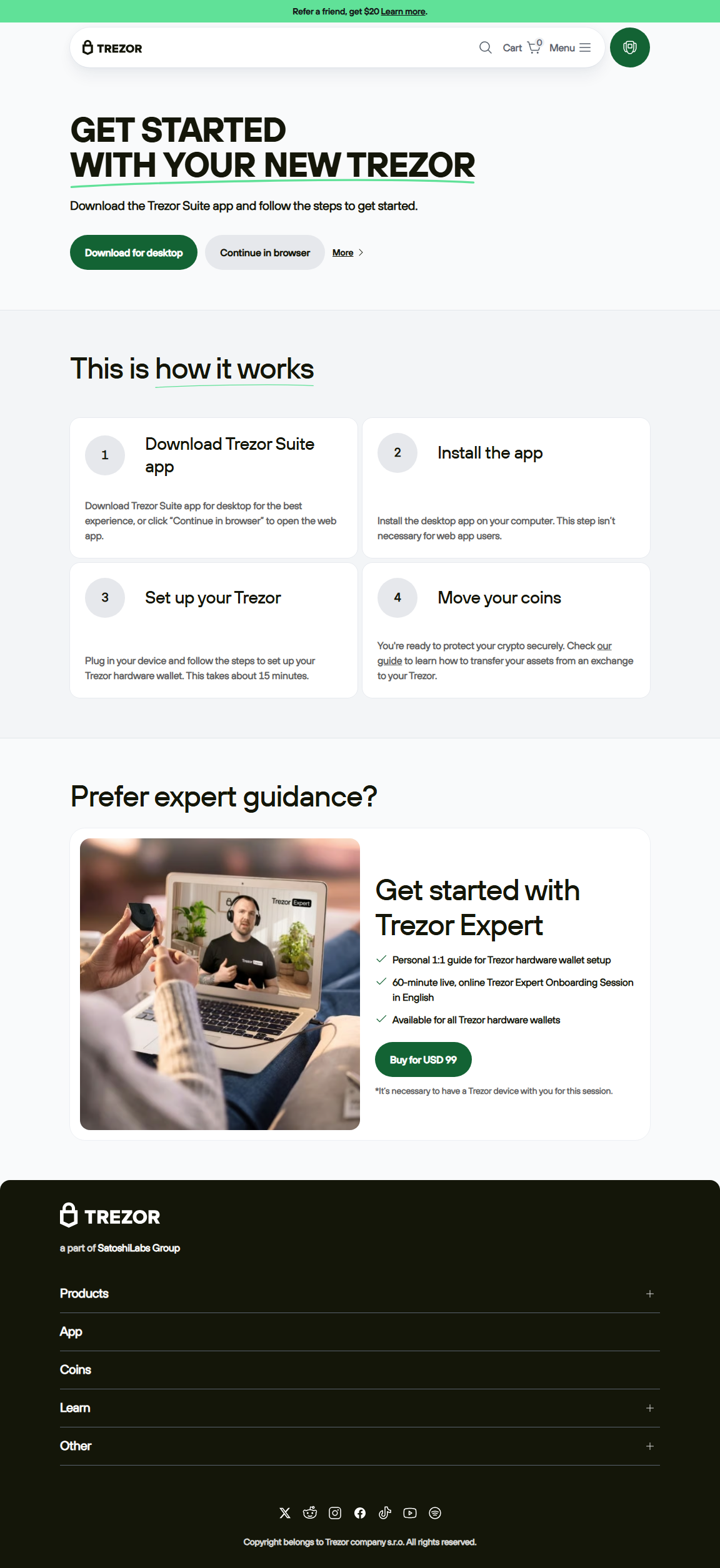
Trezor Login: Secure Access to Your Crypto Wallet
Learn everything you need to know about Trezor Login — from how it works to setting up and safely accessing your digital assets using the Trezor hardware wallet.
💡 Understanding Trezor Login
Unlike traditional logins that use usernames and passwords, Trezor Login is a physical authentication process between your Trezor hardware wallet and the Trezor Suite. Your wallet doesn’t live on the internet — it’s securely stored inside your device. When you “log in,” you’re proving that you control the private keys, without ever exposing them online.
🔐 How the Trezor Login Works
Logging into Trezor involves using the Trezor Suite application (desktop or web) while connecting your hardware wallet. Here’s what happens behind the scenes:
- Your device connects via USB or WebUSB and establishes a secure communication channel.
- You enter your PIN directly on your device to unlock it.
- If enabled, you can add a passphrase to access hidden wallets.
- Transactions and logins must be confirmed physically on your Trezor screen — protecting you from phishing and malware.
This model makes Trezor Login fundamentally different — it’s offline, tamper-proof, and decentralized.
🧭 Step-by-Step Guide: Logging into Trezor
Step 1: Open Trezor Suite
Visit trezor.io/start or open your desktop Trezor Suite app. Make sure you’re using the official site — fake ones can steal data.
Step 2: Connect Your Device
Plug in your Trezor. The Suite will recognize it and prompt you to start the login process.
Step 3: Enter Your PIN
Use your device to input your PIN. The on-screen number grid changes positions every time, preventing keylogger attacks.
Step 4: Optional Passphrase
For enhanced privacy, use a passphrase to access a “hidden” wallet. Only you know the phrase, making it impossible for others to guess.
💻 Login Options with Trezor
🚫 Common Mistakes During Trezor Login
- Entering your recovery seed online. Never type it anywhere except on your Trezor device during recovery.
- Using unofficial websites that mimic trezor.io.
- Skipping firmware updates that protect against vulnerabilities.
- Forgetting or reusing simple PINs across multiple wallets.
- Not verifying the transaction address on the device before approval.
🧠 Best Security Practices for Trezor Login
- Physically verify wallet addresses before confirming any transaction.
- Keep your recovery seed stored offline — never take digital photos of it.
- Use a passphrase for extra security layers.
- Only download software or updates from trezor.io.
- Log out and disconnect your device after every session.
❓ Frequently Asked Questions
1. Do I need an account to use Trezor?
No. Trezor is a hardware-based system that doesn’t rely on online accounts or centralized databases.
2. Can I log in to Trezor on multiple devices?
Yes, as long as you’re using your own hardware wallet and Trezor Suite on trusted computers.
3. What if I forget my PIN?
You can reset your Trezor device, but you’ll need your recovery seed to restore your wallet data.
4. Is it safe to use Trezor with MetaMask?
Yes. MetaMask uses your Trezor only to sign transactions — your private keys remain within the hardware wallet.
5. Can someone hack my Trezor Login remotely?
Highly unlikely. Without your physical device and PIN, no one can access your crypto. The security model is hardware-enforced.
“Trezor Login isn’t about entering a password — it’s about proving ownership with cryptographic certainty.”
Your hardware wallet is your personal key to decentralized control.
🏁 Conclusion: Take Ownership with Trezor Login
The Trezor Login process redefines security in cryptocurrency management. Instead of trusting centralized systems, you use cryptographic hardware to access your assets securely. By verifying actions on your device, updating firmware regularly, and safeguarding your recovery seed, you ensure total control of your funds.
Empower your crypto experience — log in the secure, decentralized, and authentic way with Trezor.